


Bull Trout (alvelinus confluentus)A large char native to cold, clean rivers and lakes of the pacific northwest. DietSmaller fish, aquatic insects, and occasional amphibians. BehaviorBull trout prefer cold, well-oxygenated water and are sensitive to environmental disturbances. They often inhabit deep pools and complex river systems, migrating upstream to spawn. Rangers note that individuals are highly territorial during spawning season and can travel long distances between feeding and breeding grounds. HabitatBull trout inhabit the park’s cold, clear freshwater systems, favoring deep pools, shaded tributaries, and gravel-bottomed streams fed by glacial melt. They require exceptionally clean, oxygen-rich water and are often found near submerged logs or undercut banks that offer cover from currents and predators. Within Spectral Valley National Park, their presence is strongest along the upper reaches of Liar's Stream and the Stillbones River, where temperature and flow remain stable year-round. Seasonal migrations between headwaters and lake systems suggest a persistent fidelity to natal spawning grounds, even when environmental conditions shift. Role in EcosystemTop predator in freshwater ecosystems, helps maintain balanced fish populations; indicator of water quality and ecosystem health. Folklore and Cultural NotesBull trout are considered omens of river health and subtle environmental change. Indigenous stories speak of them as spirits guiding streams, warning of hidden dangers or unusual events in the valley. 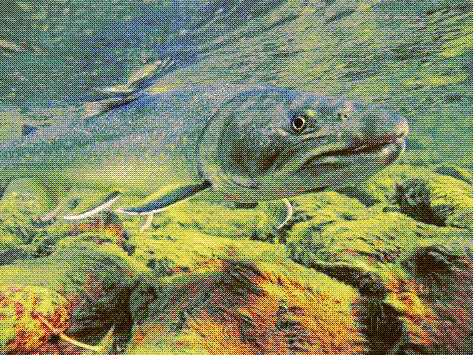
Fun Facts
|